Ring's Super Bowl Ad Was a Feel-Good Story. The Tech Behind It Might Be Something Else
Ring ran a Super Bowl ad this year about finding lost dogs. The technology they were advertising scans your neighborhood's cameras in real time using AI, it's on by default, and Ring is already planning to expand it beyond pets. They said the feature was "built with strong privacy in mind." They also just cancelled a partnership with a company that sells license plate data to ICE.
What "Search Party" Is
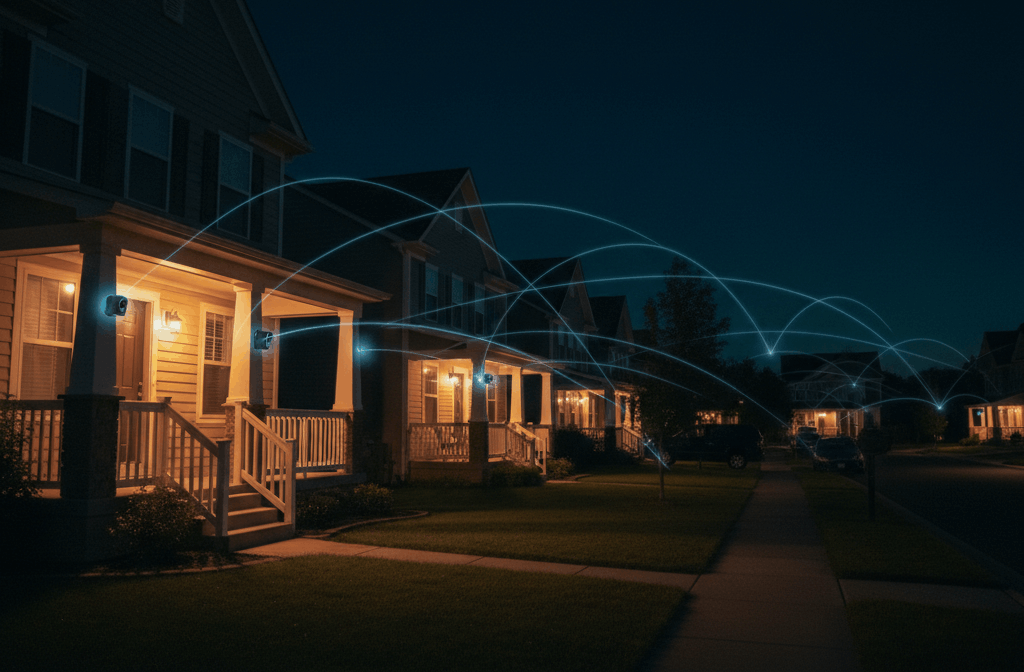
Search Party launched in September 2025. The feature connects Ring cameras across a neighborhood into a coordinated scanning network. When someone posts a lost-pet report through the Neighbors app — Ring's community alert platform — cameras enrolled in Search Party start running image recognition against their feeds, looking for a visual match based on breed, color, and size.
The system is automated. There's no human reviewing footage on your behalf. An algorithm scans what your camera sees, compares it against the target profile, and flags potential matches.
It is also on by default. Your Ring camera was enrolled in this network the moment the feature launched, unless you went into settings and disabled it yourself.
That detail did not make it into the commercial.
The Question the Ad Was Designed Not to Ask
Ring's official line is that Search Party was built with strong privacy in mind and can only be used to find pets, not people. Take that at face value for a moment. You still have a system where AI scans video from cameras installed on homes across a neighborhood, cross-references a target profile, and quietly reports matches — all without the people walking past those cameras knowing they're being scanned.
That infrastructure exists. It works. The only thing separating it from a people-finding tool is a policy choice Ring made, which they can revise.
They are apparently already considering it. A leaked internal email — reported by Engadget — indicates Ring is planning to expand Search Party beyond lost pets to missing persons and stolen property. Ring has not confirmed the plan publicly. They also haven't denied it.
Ring Already Has Facial Recognition
Search Party isn't the only AI feature running on these cameras. Ring has a separate beta product called Familiar Faces — a system that uses Ring AI to recognize specific people who approach your door. You upload photos, the system learns those faces, and sends you personalized alerts when it detects a match.
The problem the EFF has been documenting since November 2025 is the scope of who gets scanned. To find a match, the system has to scan everyone who comes into frame — delivery drivers, postal workers, neighbors walking past on the sidewalk, children selling cookies. None of those people consented to a biometric scan. They don't know it's happening. The camera doesn't distinguish between people you've saved and people you haven't. It processes all of them.
Ring is a subsidiary of Amazon, a company that also makes Alexa-enabled devices that send all recordings to the cloud for processing. The pattern is consistent: default-on data collection, opt-out rather than opt-in, and privacy assurances that tend to rely on trusting Amazon's current intentions rather than enforceable limits.
The Law Enforcement History
The Super Bowl ad introduced a lot of people to Search Party for the first time. It didn't mention what Ring has been doing with law enforcement for the past decade.
Ring started giving free cameras to police departments in 2016 as a way to grow the Neighbors app network and build law enforcement relationships simultaneously. By the early 2020s, dozens of police departments had formal partnerships with Ring, and some were able to request footage from Ring users — or in some cases access it directly — without a warrant. Ring claimed to have ended warrantless access in 2024.
Then they announced a partnership with Flock Safety.
What Flock Safety Actually Is
Flock Safety is not a consumer company. It operates one of the largest automated license plate reader networks in the United States. Its cameras are installed in neighborhoods, school zones, and along roadsides, capturing and logging the plates of every passing vehicle. The data is retained and shared with law enforcement — including, as The 74 reported, with ICE.
The planned Ring-Flock integration would have let law enforcement officers post investigation requests directly inside the Ring Neighbors app, reaching Ring camera owners in a target area and asking them to voluntarily share footage. The integration never launched. Ring cancelled it in February 2026 — after the Super Bowl ad made the scope of Ring's surveillance ambitions suddenly very visible to a very large audience.
The stated reason for cancellation was that the integration "would require significantly more time and resources than anticipated." Not privacy concerns. Logistics.
What You Can Actually Do
If you have a Ring camera and this is the first time any of this has come up for you, a few things worth doing now.
Search Party can be disabled in the Ring app under Neighbors → Neighbors Settings → Community Alerts. Familiar Faces, if it's been enabled on your account, is under Device Settings → Smart Alerts. Neither is off by default, which is the core issue — Ring treats enrollment as the passive state and requires active effort to exit.
The harder question is whether the device belongs in your setup at all. Ring's business model is built on the Neighbors network, which means the camera isn't just a camera — it's a node in a data-sharing platform whose relationships with third parties, including law enforcement, have changed repeatedly over the years and will keep changing. What those relationships look like next year is genuinely unknown.
The commercial showed you a lost dog being found. The infrastructure it was advertising is capable of considerably more than that, it was already connected to a license plate surveillance company that shares data with federal immigration enforcement, and the company is on record considering expanding the pet-finding feature to tracking people.
Ring is one example of a broader device tracking problem.
Ring said the feature was built with strong privacy in mind. The Flock Safety partnership was also, presumably, built with something in mind. You just weren't told about it until a Super Bowl ad made the whole thing too visible to ignore.
The broader pattern of how home devices quietly expand their data collection is covered in The Devices in Your Home Are Listening. For a look at who else is aggregating your information without asking, Data Brokers: What They Know About You is a useful starting point — and your digital footprint is larger than most people realize.